
Paper trading uses simulated funds, while live trading uses real capital. The strategy rules may be identical, but execution quality, emotions and consequences are not.
Paper trading and live trading are not identical
A simulated order is created
The simulator estimates an execution price
Spread and liquidity can change quickly
Price may differ or only partly fill
Capital and emotions are involved
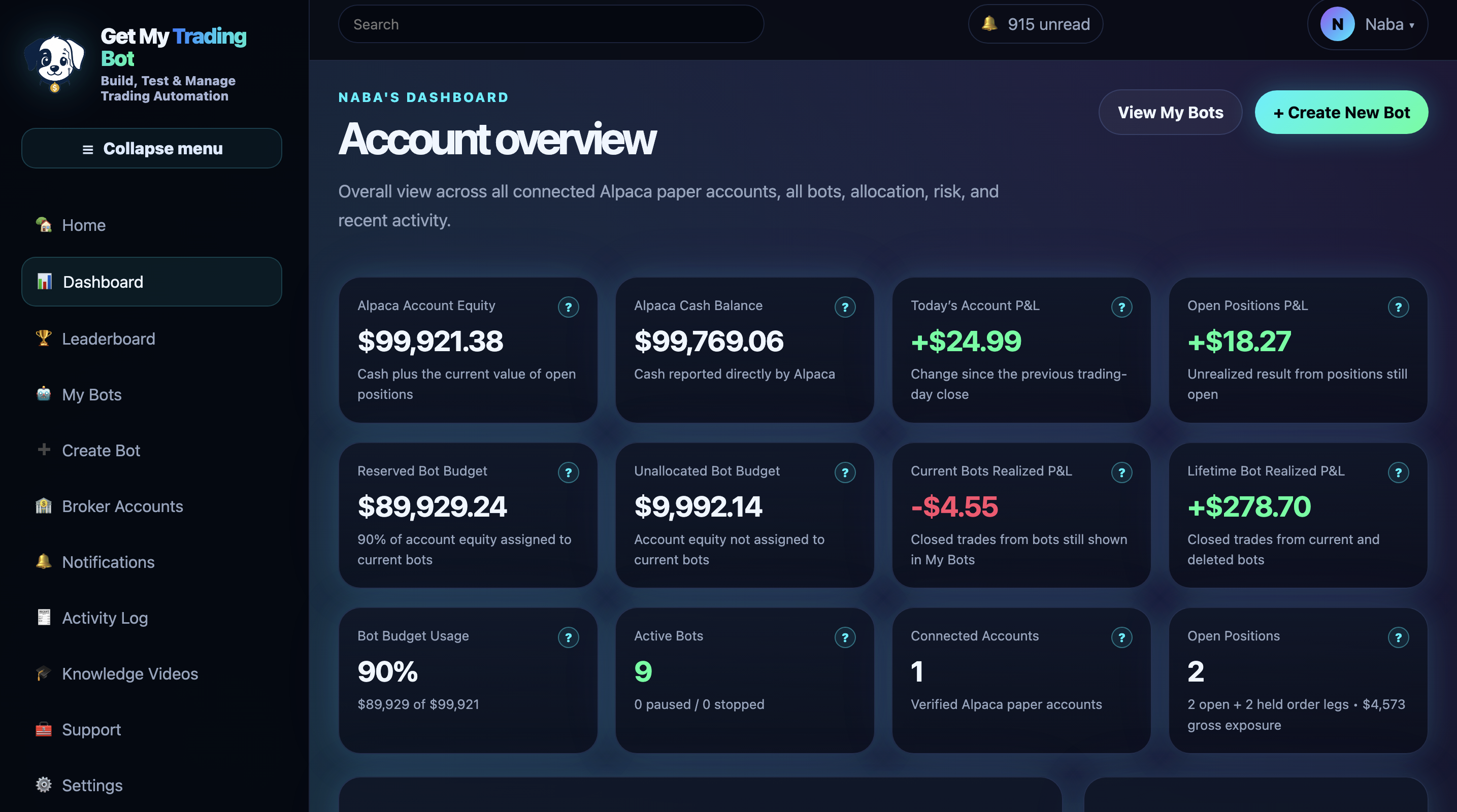
See the concept inside GetMyTradingBot
What paper trading is good for
Paper trading helps verify that the bot runs, signals appear at the expected times, position sizes are reasonable and exits behave as configured.
Important differences in live markets
A simulation may not reproduce queue position, partial fills, rejected orders, changing spreads or the emotional pressure of real losses.
- Live orders may fill at a worse price.
- Liquidity can disappear during fast moves.
- Broker buying-power and short-sale rules apply.
- Real money can change decision-making behavior.
How long should paper testing continue?
Use enough time to observe multiple trades and different conditions. A few profitable days are not a reliable sample. Focus on whether the system behaves consistently and within the risk limits.
Keep expectations realistic
Paper results and backtests do not guarantee live performance. Treat simulation as a learning and verification stage rather than proof that a strategy will make money.
Frequently asked questions
Is paper trading risk free?
It avoids risking real capital, but it can create false confidence when simulations do not reflect live execution.
Does paper trading use real market data?
That depends on the broker and subscription. Data may be real-time, delayed or simulated.
Can a profitable paper bot lose live?
Yes. Market conditions, execution, costs and behavior can all produce different results.