
A useful backtest begins before you click Run. First define the strategy in enough detail that another person could apply the same rules and obtain the same signals.
A controlled backtesting process
Symbol, timeframe, entry, exit and risk
Include different market conditions
Estimate spread, slippage and commission
Check timestamps, signals and exits
Adjust one setting and retest
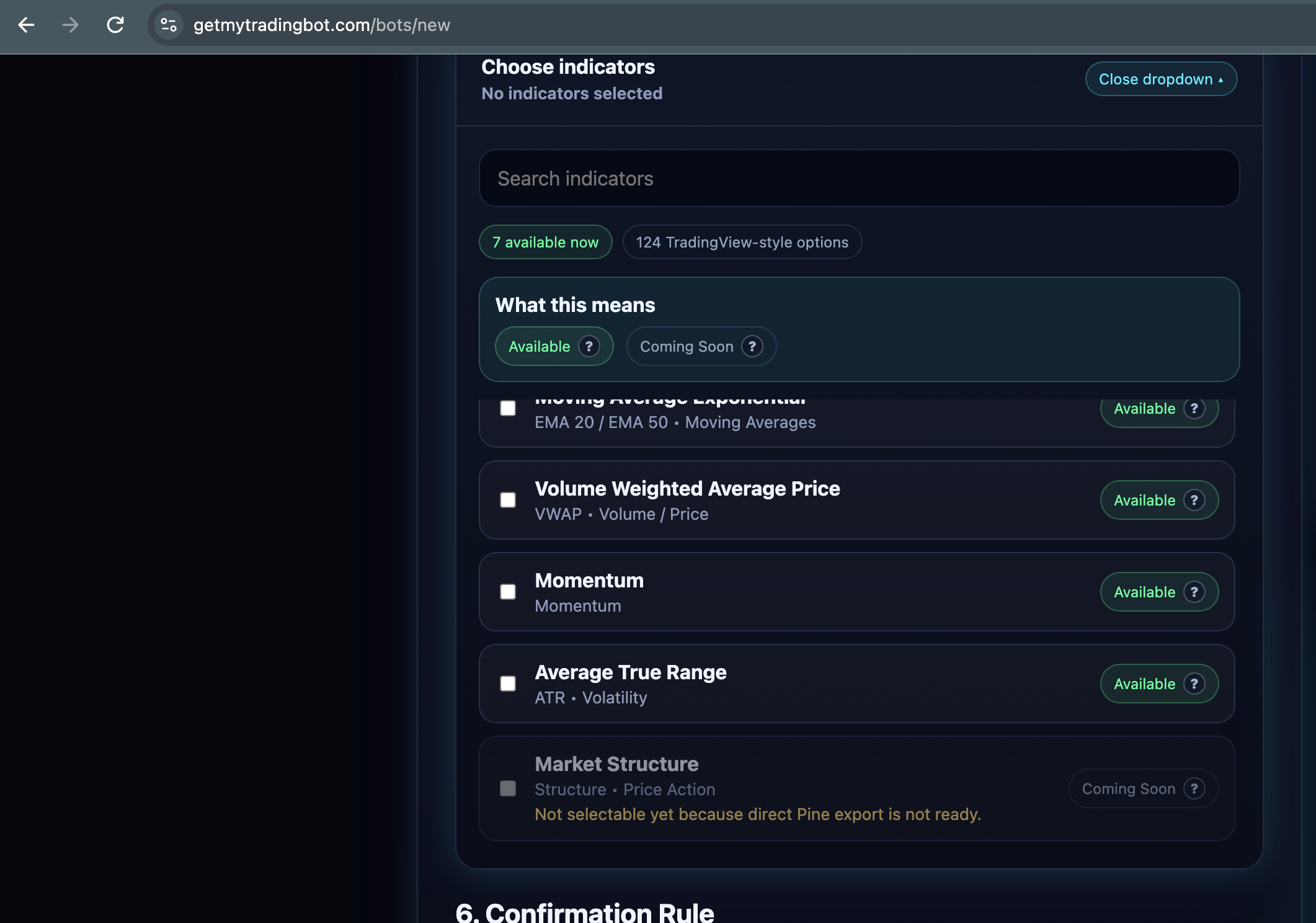
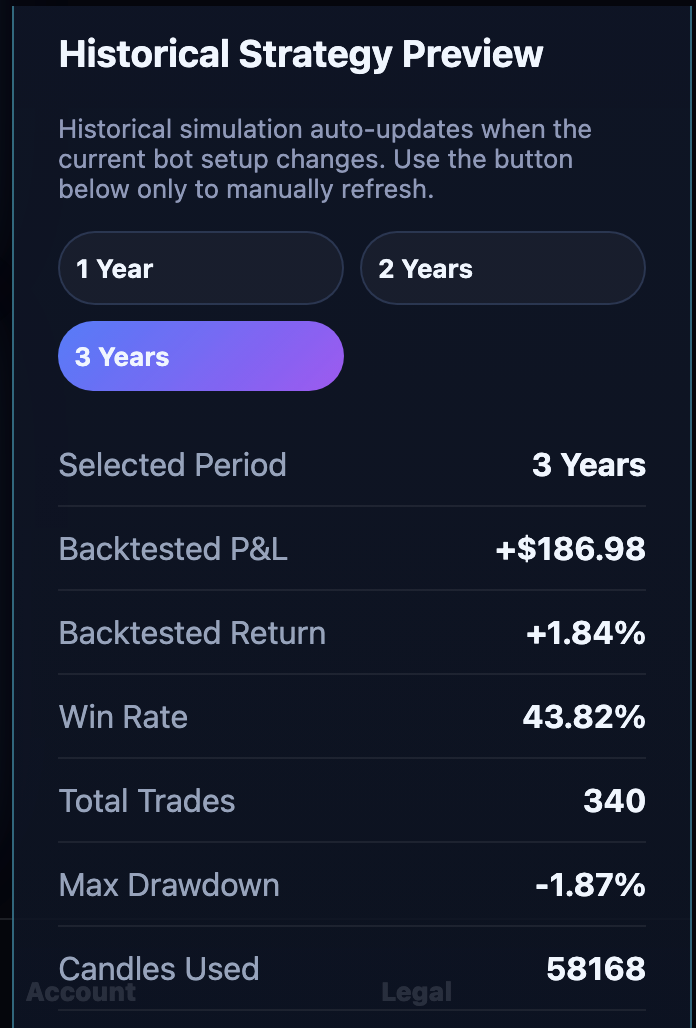
See the concept inside GetMyTradingBot
Write the rules first
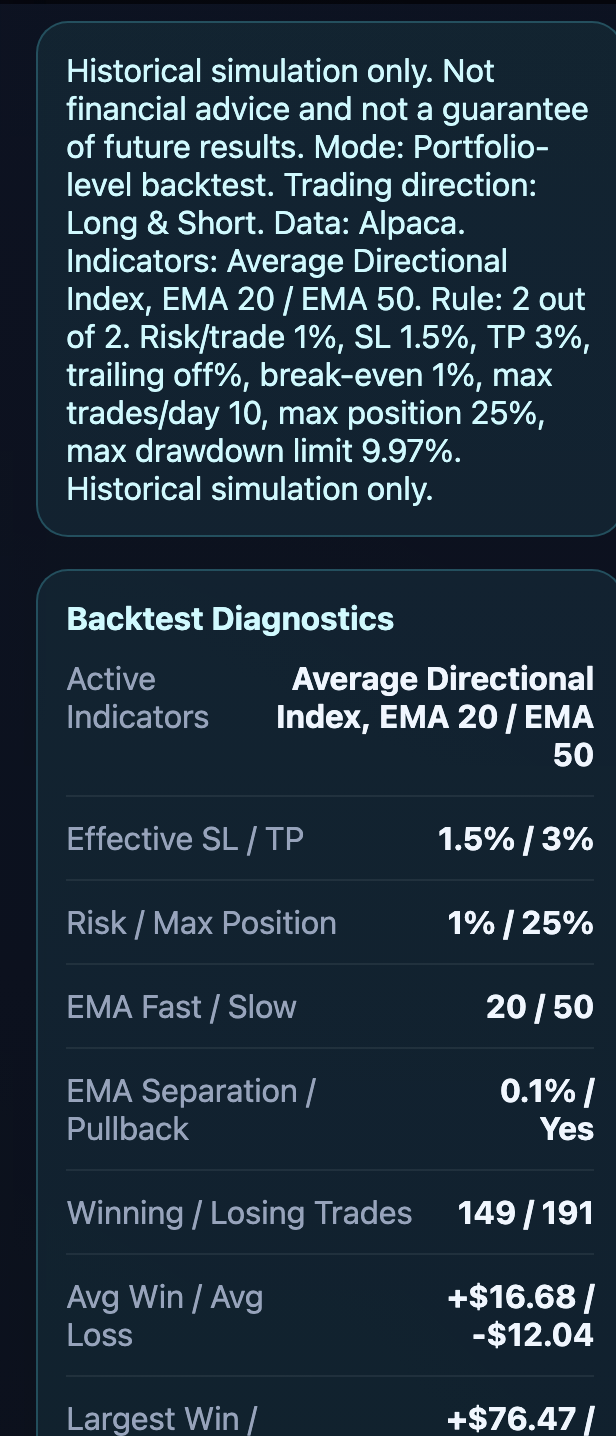
Document the symbol, timeframe, indicator settings, entry condition, exit condition, position size, stop loss, take profit, trading hours and overnight policy.
Choose a meaningful date range
Avoid selecting only a period where the strategy obviously worked. Include different volatility and trend environments whenever data is available.
Add realistic assumptions
Small costs can materially change frequent strategies. Use realistic commissions, spread and slippage rather than assuming every order fills exactly at the displayed price.
Review the trade list
Summary metrics can hide errors. Inspect entries, exits, timestamps and reasons. Confirm that a trade did not use future data and that end-of-day behavior matches the strategy settings.
Change one variable at a time
When improving the strategy, adjust one setting and compare the result. Changing several indicators and risk rules at once makes it difficult to understand what caused the difference.
Frequently asked questions
Is free backtesting enough?
It can be enough for early research and education. Data quality, assumptions and feature depth still matter.
Why did my TradingView result differ?
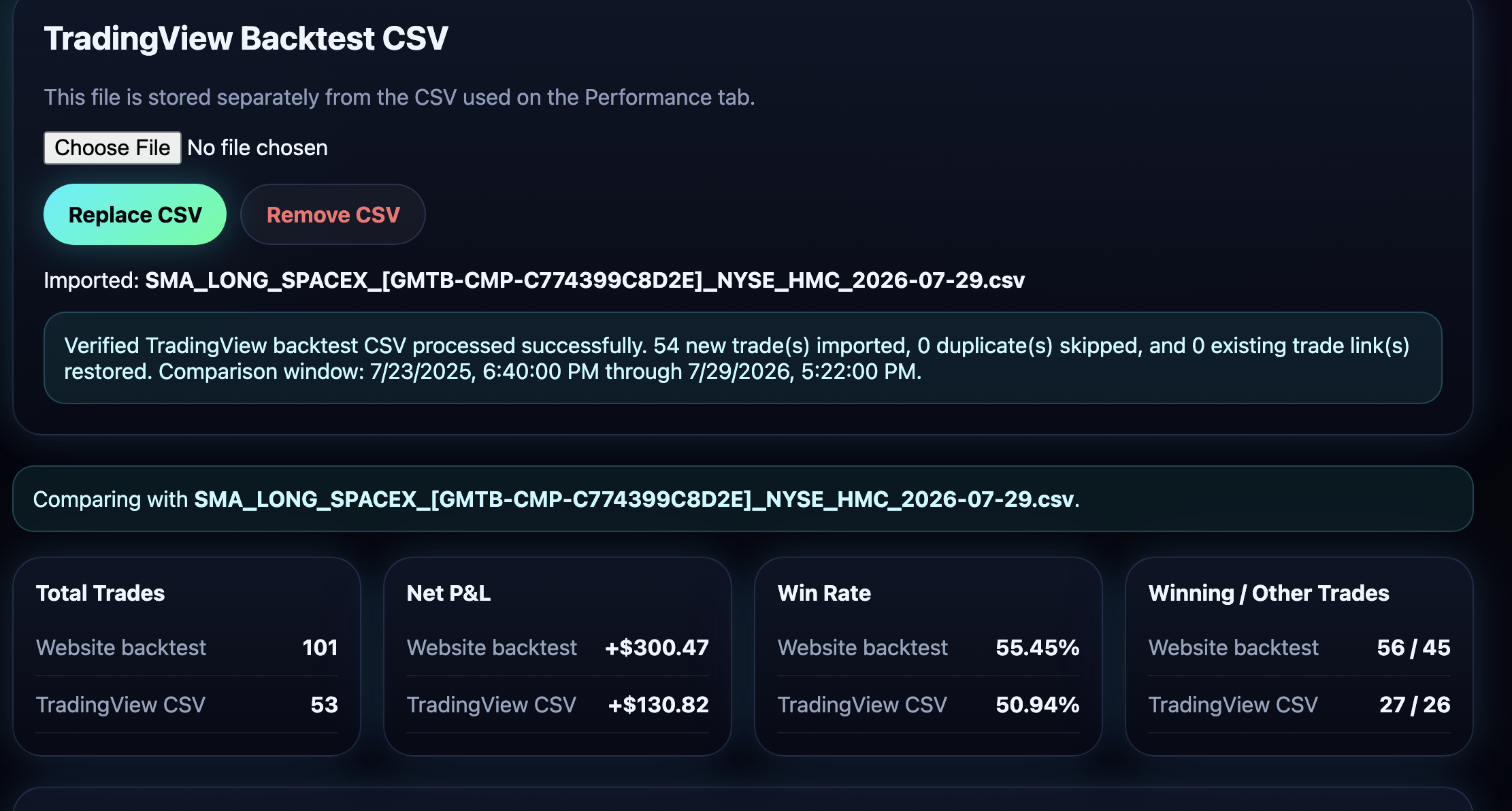
Platforms can use different data feeds, candle construction, sessions, order assumptions and implementation details.
Should I test many symbols?
Testing more than one symbol can help identify whether the idea is broadly useful or dependent on one chart.